
Committee on Radio Astronomy Frequencies (CRAF) admitted to CISPR seeking to advance standards for satellite radio-noise

The Committee on Radio Astronomy Frequencies has been admitted as an I-member of the International Special Committee on Radio Interference. This is a further big step towards the recognition of unintended electromagnetic radiation from satellites as a serious problem for radio astronomy. This membership will lay the groundwork for future mitigation measures to safeguard astronomical research from the negative impacts of large satellite constellations.
In recent years, the number of satellites launched into orbit has greatly increased. “While these systems provide essential services, including global connectivity, navigation, and Earth observation, they were also found to generate unintended electromagnetic radiation (UEMR), radiation not linked to their intended communications,” says Committee on Radio Astronomy Frequencies (CRAF) Chair Benjamin Winkel (MPIfR). Unlike traditional transmission signals, UEMR arises from the satellites’ internal electronics and can leak across wide frequency ranges. Studies conducted with radio telescopes around the world have confirmed the presence of such signals, including signals within frequency bands that are internationally protected for radio astronomy.
The CRAF, an expert committee of the European Science Foundation (ESF), represents the interests of radio astronomy observatories and research institutes across Europe and South Africa in preserving the operating conditions for radio astronomy and other basic sciences.
“Starting with an experiment at the European Low Frequency Array (LOFAR) by members of CRAF and the Square Kilometre Array Observatory (SKAO), radio observatories around the world have by now confirmed the presence of such radiation” according to Federico Di Vruno (SKAO), who led the initial observing campaign. “UEMR also occurs within frequency bands that are internationally protected for radio astronomy operations as defined in a United Nations treaty through the International Telecommunication Union (ITU-R)”, Gyula Józsa (MPIfR) adds, coordinator of CRAF's satellite group and co-author on the original paper.
"Radio astronomy is vulnerable to interference, as it relies on the detection of extremely faint signals originating from distant stars, galaxies, and the early Universe", former CRAF Chair Michael Linqvist (OSO) explains. Even weak leakage from large numbers of satellites can significantly degrade the scientific environment. Without technical and regulatory safeguards, radio telescopes risk losing their ability to conduct research.
"The International Special Committee on Radio Interference (CISPR), part of the International Electrotechnical Commission (IEC), sets global standards to limit electromagnetic interference. With its new role in CISPR, CRAF will advocate for the protection of radio astronomy and try to ensure that the impact of interference on radio telescopes is considered in future standardisation.", CRAF member Emma van der Wateren (ASTRON) adds, who represents CRAF at CISPR and led the efforts to become a member.
"CRAF’s admission to CISPR creates the opportunity for the committee to work with administrations, industry stakeholders, and technical experts on proposals for an international electromagnetic compatibility (EMC) standard for satellites in orbit", van der Wateren continues. If taken forward, such a standard would aim to ensure that satellites comply with limits on unintended radiation, much like terrestrial electronic devices must adhere to EMC rules to protect nearby equipment. "This would represent the first coordinated global step towards developing an EMC standard for satellites, with the goal of mitigating UEMR and safeguarding radio astronomy", so van der Wateren.
In addition to the efforts with CISPR, Linqvist and van der Wateren are engaging with the International Organization for Standardization (ISO) through their respective national standardisation bodies, Swedish Institute for Standards (SIS) in Sweden and Netherlands Norm (NEN) in the Netherlands. These discussions explore the possibility of initiating work on an EMC standard for satellites in operation at ISO, complementing efforts within CISPR.

Check out related news
Science for Policy Exchange: a new project to connect researchers and policymakers across Europe
S4PXchange, a new project to strengthen connections between science and policymaking across Europe.
Connecting European Science: ESF Joins Horizon Europe Initiatives to Streamline Research Infrastructure Access
ESF is pleased to announce it is taking active role in a new coordinated effort funded under the Horizon Europe INFRADEV-05 framework.
Advancing AI in Europe: From Foundations to Real-World Applications
ENFILED final conference brings together leading voices from academia, industry, and public policy to confront the most consequential challenges shaping the future of AI on the continent.
BRYOMOLECULES explores the potential of bryophytes for the cosmetic and pharmaceutical sector
The BRYOMOLECULES project is making progress in exploring bryophytes.

BlueActionAA 2026 Call for proposals
Two calls are currently open for Applications: BlueActionAA Community-Led Pilot Action Call and BlueActionAA Transition Agenda Call 1
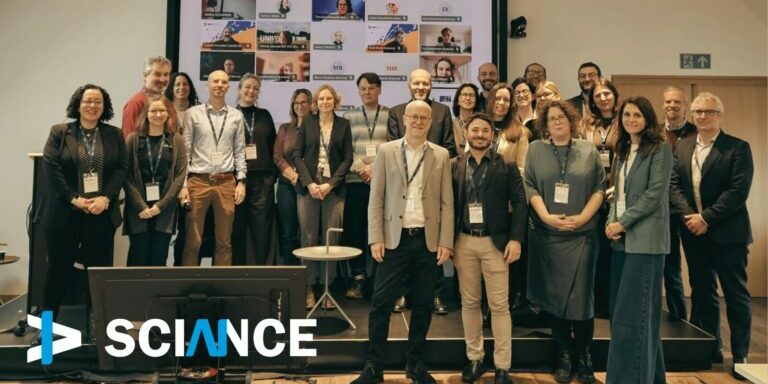
SCIANCE project kicks off: Shaping AI in Science, by Scientists, for Europe
SCIANCE project officially kicks off today in Brussels, shaping AI in Science

Discover PASSENGER’s key findings
PASSENGER Facsheets showcasing the results achieved by each pilot plant and work package.
PASSENGER project concludes: advancing Europe’s autonomy in producing permanent magnet materials
After four years of work, PASSENGER successfully concludes today

Unlocking the Potential of Bryophytes: BRYOMOLECULES documentary released
ESF is pleased to announce the release of the BRYOMOLECULES documentary.
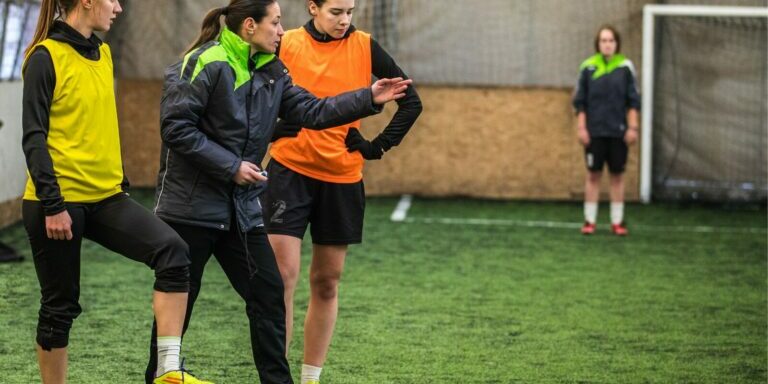
SUPPORTER achieves key milestone in driving gender equality in sports
Eight sports higher education institutions have successfully developed, endorsed, and published their Inclusive Gender Equality Plans.
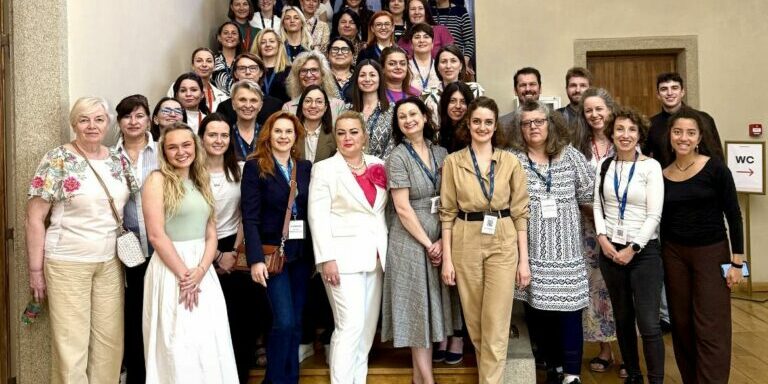
Advancing Gender Equality in Sport: Highlights from the SUPPORTER Final Conference
On 4–5 June 2025, the SUPPORTER project organised its final conference in Prague.
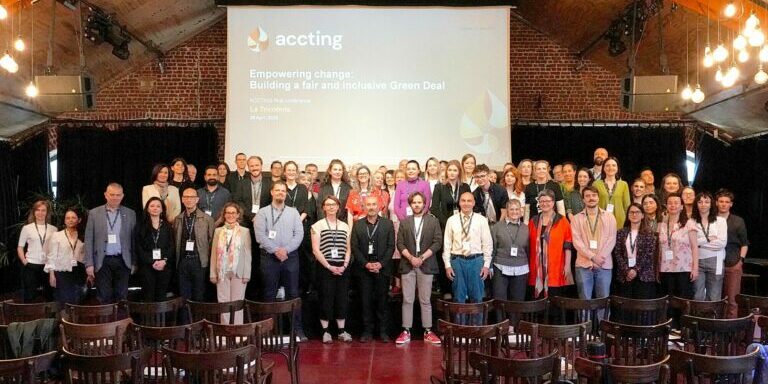
The ACCTING project comes to an end
The ACCTING project, Advancing behavioural change through the European Green Deal has concluded.