
ESF’s involvement in European Research Infrastructures landscape
From the outset, the ESF has been instrumental in sculpting the European research infrastructure (RI) policy framework. The foundation's efforts gained momentum with the advent of the European Research Area (ERA) in 2000, emphasizing the need for large-scale scientific infrastructures through intergovernmental collaboration. The ESF's role as a convening platform for policy dialogue facilitated the launch of several pan-European RIs across a spectrum of disciplines, marking significant milestones in Europe's RI landscape.
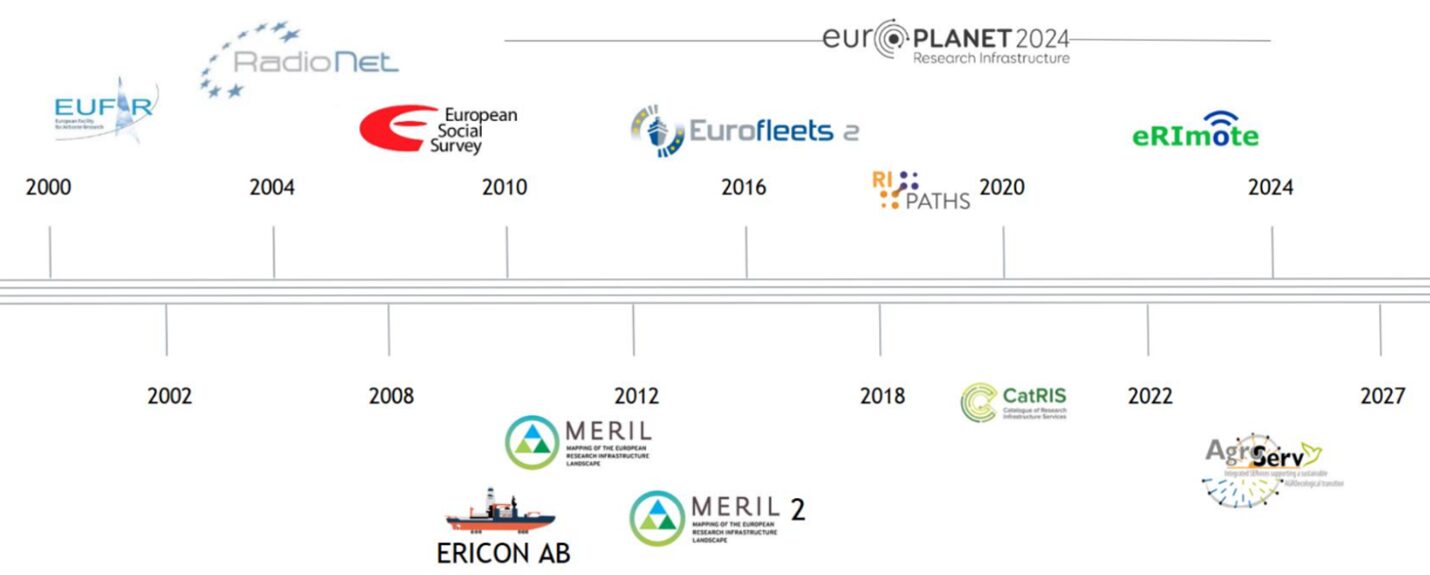
Among these major initiatives were EUFAR (European Facility for Airborne Research) an integrated support and access facility for airborne research instruments; Aurora Borealis the concept of an icebreaking arctic research vessel that would serve as a multidisciplinary platform for scientists to conduct research in the polar regions; EUROFLEETS an alliance of European marine research infrastructure to enhance the coordination and usage of research vessels; and ESS (European Social Survey) a pan-European survey that measures the attitudes, beliefs, and behavior patterns of diverse populations in Europe.
The ESF's foundational role in these initiatives not only facilitated the emergence of new pan-European research infrastructure projects but also contributed to their inclusion in the ESFRI Roadmap. This roadmap serves as a strategic document outlining key RI projects in Europe, marking essential milestones in the ESF's contributions to the development of the continent's research infrastructure.
Recent Shifts in ESF's Strategic Focus
During its transformative journey and beyond, ESF has positioned itself in a slightly different role while still retaining its mission as an enabler for European science through an array of RI projects. Embracing a new vision, ESF has evolved into a catalyzing force for European science, leveraging its extensive knowledge and expertise to facilitate policy processes through various research infrastructure (RI) projects at the European level.
Noteworthy among these are the MERIL I and II projects (2010 – 2019) that represent Europe’s inaugural programmatic effort to map national-level research infrastructures across the continent . Recognized as critical assets, these infrastructures are instrumental in consolidating Europe's scientific strengths and fostering synergies. MERIL initiative introduced a comprehensive information portal, offering insights into national facilities. However, it also underscored the necessity for systematic cataloging to enhance interoperability and clarify the scientific domains and subdomains each RI serves. This need led to the inception of the CATRIS project (2019-2021) again coordinated by ESF, which sought to address these challenges by adopting an ontological model inspired by the early EOSC catalog.
Subsequent initiative RI PATHS (2018-2020), further exemplified ESF's commitment to enhancing the visibility and societal impact of European RIs. As a response to the European Commission's call for developing compelling arguments to highlight the socioeconomic impacts of RIs to a broad spectrum of stakeholders, this endeavor underscores ESF's commitment to not only advancing scientific infrastructure but also demonstrating its broader societal benefits and contributing to policy goals at the European level.
In addition to these policy relevant projects, ESF has contributed to two thematic initiatives: Europlanet24 (2010-2024) and AGROSERV (2022-2027), where it played a vital role in supporting grant evaluation processes. The latest in ESF's portfolio of EC-funded RI projects is ERIMOTE (2022-2024), which aims at fostering a comprehensive understanding of remote access to research infrastructures. The project explores the notion of remote access which is portrayed as an alternative to traditional physical access, addressing barriers like scheduling conflicts and mobility restrictions but also aims at bringing a balanced approach to this notion by highlighting the limitations that researchers face when they resort to working remotely on their experiments.
Looking ahead
ESF’s RI cluster remains actively engaged with a broad network of stakeholders, continuously monitoring developments across the European research infrastructure landscape. By staying attuned to emerging projects, policy shifts, and operational needs, ESF is well-positioned to explore new forms of engagement and contribution. With its established expertise and adaptive approach, it will continue to play a catalytic role, bridging past achievements with future opportunities to support a more integrated, responsive, and impactful European research infrastructure ecosystem.
Your Partner in Research Infrastructures!



Get in touch!
We are ready to answer any questions, discuss potential collaborations, and schedule a meeting. Feel free to give us a call or drop us an email.

Oguz Ozkan
Science Officer - Research Infrastructure Lead